
The 49ers Just Proved They Can Win as Underdogs
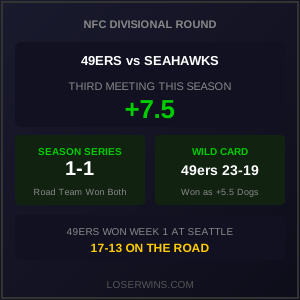
San Francisco walked into Philadelphia on Sunday as 5.5-point underdogs against the defending Super Bowl champions. They walked out with a 23-19 victory and ended the Eagles’ repeat bid. Now the 49ers travel to Seattle for the Divisional Round, where they’re catching 7.5 points against a team they already beat once this season.
That number deserves scrutiny. The 49ers aren’t some overmatched opponent stumbling into the playoffs. They’re 8-2 on the road this season and have won seven of the last nine meetings against Seattle overall. This is a rubber match between division rivals who know each other as well as any two teams in football.
Season Series Split 1-1, Road Team Won Both
The 49ers and Seahawks have already played twice this season, and both games produced the same result: the road team won.
Week 1: San Francisco traveled to Seattle and won 17-13. Week 18: Seattle went to San Francisco and won 13-3, clinching the NFC’s top seed in the process. That Week 18 game happened just 11 days ago. The Seahawks dominated, holding the 49ers to 173 total yards. But that was in San Francisco, not Seattle.
The pattern matters. In the only game played at Lumen Field this season, the 49ers won. Now they’re heading back there as 7.5-point underdogs for the third meeting. Oddsmakers have priced this game as if the Week 18 result is the only data point, but the full picture shows a split series with each road team taking the victory.
Why Third Meetings Favor the Underdog
When teams meet three times in a single season, both coaching staffs have extensive film, established game plans, and detailed knowledge of each other’s tendencies. There are no surprises left. As contrarian betting theory suggests, this familiarity tends to level the playing field rather than widen it.
The Seahawks’ defensive game plan that shut down San Francisco in Week 18 is now on tape. Kyle Shanahan’s staff has had two weeks to study it. The 49ers know exactly what Seattle will try to do, and they’ve already beaten this same defense once at this same venue.
Seattle’s advantages are real. They’re rested after a bye week while San Francisco played Sunday. They’re home. They have the league’s best scoring defense. But 7.5 points accounts for more edge than the evidence supports.
The Injury Factor Cuts Both Ways
George Kittle’s torn Achilles suffered against Philadelphia is a significant loss. The All-Pro tight end was a key weapon in San Francisco’s passing attack. Markets reacted by pushing the spread from an opening 6.5 to 7.5.
But the 49ers just won in Philadelphia without Kittle playing a full game. He exited early, and San Francisco still found a way to upset the Eagles on the road. Christian McCaffrey caught six passes for 66 yards and two touchdowns. The offense adapted. Whether they can do so again against Seattle’s elite defense is an open question, but the Wild Card performance suggests this team has answers beyond their injured tight end.
Public Perception vs. Reality
The Week 18 result created a narrative: Seattle is dominant, San Francisco is vulnerable. That narrative ignores the Week 1 result at the same venue. It ignores the 49ers’ 8-2 road record. It ignores that San Francisco has won seven of the last nine meetings between these teams. Public money tends to chase recent results, and the psychology of betting makes favorites in playoff games especially attractive.
Seattle deserves respect. A 14-3 record and the NFC’s top seed aren’t accidents. But 7.5 points for a rubber match against a division rival who already won at your stadium this season? That’s a number built more on narrative than on the full body of evidence.
What the Data Says
The 49ers finished the regular season 11-7 against the spread. They’re 8-2 ATS on the road. They just covered as 5.5-point underdogs and won outright in a playoff game. Seattle, despite their excellent record, went just 4-4 ATS at home this season.
None of this guarantees San Francisco covers Saturday. Playoff games are single-elimination events where anything can happen. But when a team that already beat you at your home stadium is getting more than a touchdown, the math tilts toward the underdog.
Third meetings in the same season are rare. They create maximum familiarity between opponents. And familiarity, more often than not, compresses margins rather than expanding them.