
The Rarest Playoff Spot
Home underdogs in the NFL playoffs are unicorns. The seeding structure ensures division winners host wild card teams, and those division winners are typically favored. You might see two or three home underdogs across an entire postseason. Some years, none at all.
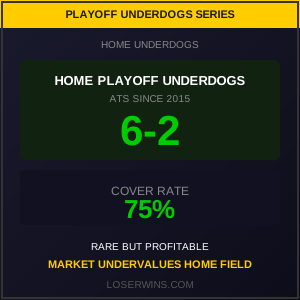
But when they appear, home playoff underdogs have been profitable. Since 2015, they’re 6-2 against the spread. That’s a 75% cover rate in a small but meaningful sample. The rarity itself is part of the value.
Why Home Underdogs Happen
For a home team to be an underdog in the playoffs, something unusual has to occur. The most common scenario is a weak division winner hosting a strong wild card team. You see this when a team limps to a division title with a mediocre record while a talented squad from a tough division earns a wild card.
The 2026 bracket offers a potential example. The Carolina Panthers won the NFC South at 8-9, making them the first sub-.500 division champion since the 2022 Buccaneers. They’ll host the 10-6 Rams, and Los Angeles opened as 10.5-point road favorites. Carolina is a home underdog by virtue of winning a weak division while facing a battle-tested wild card.
These situations create market inefficiencies. The public sees a bad team hosting a good team and assumes the good team should win easily. But home-field advantage still matters. The crowd still shows up. The team still earned the right to host by winning their division, however ugly the path looked.
Home-Field Advantage in January
Playoff home-field advantage differs from the regular season version. The stakes intensify crowd energy. Weather can become a factor in cold-weather stadiums. Teams that built their identities around playing at home get to do so when it matters most.
The contrarian philosophy suggests that these edges get undervalued when the “home” team happens to be an underdog. The market focuses on the perceived talent gap. It discounts the intangibles that come with hosting a playoff game.
A 10-point road favorite needs to win by 11 or more in a hostile environment. That’s a tall order regardless of the talent disparity. Home playoff underdogs don’t need to win. They need to keep it competitive. History says they do exactly that.
The Motivation Factor
Home underdogs in the playoffs carry a unique psychological profile. They know the national perception. They’ve heard all week that they don’t belong, that they’re hosting a game they have no business being in, that their division title means nothing against real competition.
That chip on the shoulder matters. Teams playing with something to prove often perform above their season averages. The Panthers, for example, have already beaten the Rams once this year. They won 31-28 at home in Week 13. The public has apparently forgotten that result.
Road favorites, meanwhile, sometimes arrive expecting victory. They’ve been told all week they’re the better team. That confidence can slip into complacency. When the home underdog throws the first punch, the favorite has to recalibrate.
Weather as Equalizer
January playoff games in certain stadiums introduce weather variables that can neutralize talent gaps. A dome team traveling to Green Bay or Chicago faces conditions they didn’t prepare for all season. A warm-weather squad in New England deals with cold that affects grip, timing, and execution.
When home underdogs play in tough weather environments, the spread becomes harder to cover for the road favorite. Scoring drops. Mistakes increase. Games get compressed into smaller margins. A 10-point spread in September conditions might be a 6-point game in January conditions.
This year’s bracket includes several cold-weather hosts. The Bears host Green Bay in a rivalry game where both teams are accustomed to the conditions. The Steelers host Houston on Monday night, with Pittsburgh’s January weather potentially affecting a Texas team. These factors don’t guarantee underdog covers, but they compress expected margins.
The Pandemic Exception
The only recent season with multiple home playoff underdogs was 2020, when empty stadiums eliminated crowd advantage. Both home underdogs that year still covered the spread, but the circumstances were unique. The sample since then has reverted to normal: home underdogs are rare, but when they appear, they perform.
This matters because it suggests the edge isn’t solely about playing at home. Something about the market’s pricing of these situations creates value. Whether it’s underrating motivation, overrating the favorite’s superiority, or simply not adjusting enough for home-field in the spread, the numbers favor the home underdog.
2026 Home Underdog Watch
The Panthers represent the clearest home underdog in this year’s Wild Card round. Double-digit underdogs at home happen rarely. When a team wins its division, hosts a playoff game, and still gets 10+ points, the market is making a strong statement about perceived quality.
But the Panthers have already proven they can beat the Rams at home. They forced three turnovers in that Week 13 win. Young Bryce Young has shown flashes of competence down the stretch. The defense has been solid. None of this makes them likely winners, but likely to cover 10.5 points? History suggests it’s more probable than the public believes.
The Bears hosting the Packers sits near a pick’em, so it’s not technically a home underdog situation. But watch the line movement. If Chicago drifts to +2 or beyond, that Bears-at-home-with-points situation enters home underdog territory where the historical edge kicks in.
How to Approach Home Underdogs
The sample size here is small enough that you shouldn’t blindly bet every home playoff underdog. But when the situation arises, it deserves serious consideration. The 6-2 ATS record since 2015 reflects something real about market pricing.
Look for these factors when evaluating home playoff underdogs:
First, has the home team already beaten the opponent this season? A prior win suggests competitive capability regardless of seeding.
Second, what’s the weather forecast? Cold, wind, or precipitation compresses scoring and makes large spreads harder to cover.
Third, where is the public betting money landing? Heavy one-sided action on the road favorite inflates the line and creates value on the home dog.
Fourth, how did the home team reach this spot? A team that won meaningful games down the stretch often plays better in January than their record suggests.
Home underdogs in the playoffs don’t come around often. When they do, the data says they’re worth a close look.