
The Market Has Doubts
The Chicago Bears won 12 games this season. They finished first in the NFC North. They earned the conference’s second seed and home-field advantage through the divisional round. And yet, when they host the Los Angeles Rams on Sunday, they’ll be underdogs.
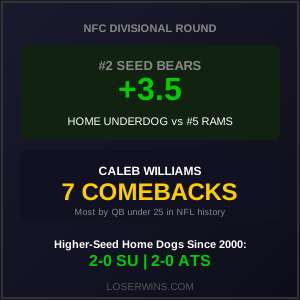
The Bears opened at +4.5 before the line tightened to +3.5 at most sportsbooks. That makes Chicago just the fourth team since 2000 to be a home underdog in the divisional round while holding the higher seed. The 2011 49ers, 2017 Eagles, and now the 2026 Bears join an exclusive club that oddsmakers rarely create.
This isn’t about the Bears being bad. It’s about the market pricing in doubt despite evidence that suggests otherwise.
Seven Comebacks and Counting
Caleb Williams has led seven fourth-quarter comebacks this season. That’s the most by any quarterback under 25 in NFL history, surpassing Peyton Manning’s record. The Wild Card win over Green Bay was the latest example: down 21-3 at halftime, Williams threw for 184 yards in the fourth quarter alone and connected with DJ Moore for the game-winning touchdown with 1:43 remaining.
The Bears scored 25 fourth-quarter points against the Packers. Only two other teams in NFL playoff history have done that. Chicago is 6-2 at Soldier Field this season, and their two home losses came by a combined six points.
Yet the betting market has decided that Matthew Stafford and the fifth-seeded Rams are the better team on a neutral field by enough margin to overcome home-field advantage entirely. That’s what a road favorite implies.
What History Says About Higher Seeds as Home Underdogs
Since 2000, there have been three instances of a higher-seeded team being a home underdog in the divisional round:
In January 2012, the second-seeded 49ers were 2.5-point home underdogs against the third-seeded Saints. San Francisco won 36-32 in one of the most memorable playoff games in recent history.
In January 2018, the first-seeded Eagles were 2.5-point home underdogs against the sixth-seeded Falcons after losing Carson Wentz to injury. Nick Foles led Philadelphia to a 15-10 victory on their way to a Super Bowl championship.
The sample size is small, but the pattern is clear. Both higher-seeded home underdogs won outright. Both covered the spread comfortably.
The Rams Have Their Own Questions
Los Angeles barely escaped Carolina in Wild Card Weekend. The Panthers, the largest home playoff underdog in NFL history at +10.5, trailed by just three points with under a minute remaining before Stafford engineered a game-winning drive. The Rams covered, but they didn’t answer the questions about consistency that have followed them all season.
Stafford’s finger injury remains a concern. He aggravated it against the Panthers and has been limited in practice this week. The forecast for Soldier Field calls for temperatures in the single digits with wind gusts approaching 30 mph. That’s not California weather, and the Rams’ pass-heavy offense could struggle in those conditions.
Chicago’s defense has allowed just 16.3 points per game over their last four home contests. The Bears’ rushing attack, led by D’Andre Swift and Kyle Monangai, ranks third in the league and should be able to control the clock in January conditions.
Why the Market May Be Wrong
Public perception often lags behind reality. The Bears were 5-12 last year. Caleb Williams had a rocky first season. Chicago hasn’t won a playoff game since 2010 before this year’s Wild Card victory.
But perception isn’t reality. Ben Johnson’s first year as head coach has transformed this team. Williams leads the NFL in fourth-quarter scoring drives. The Bears are 12-5-1 against the spread, tied for the best ATS record in the NFC.
The Rams have the name recognition. They have the MVP candidate at quarterback. They have the Super Bowl pedigree. And when the public sees that matchup, they see the team they’ve been watching for years against the team they’re still learning to trust.
That’s exactly what creates contrarian value.
Looking Ahead
Home underdogs of four points or more in playoff games are 9-0 against the spread over the last 50 years. The Bears fit that profile. They have the quarterback who refuses to lose in the fourth quarter, the home-field advantage the market is discounting, and the historical edge that comes with being underestimated in January.
The Bears may lose this game. The Rams have enough talent to win anywhere. But the spread suggests Chicago can’t compete, and seven fourth-quarter comebacks say otherwise.
When a second seed with the most clutch quarterback in the league hosts a fifth seed as an underdog, the market is making a statement. Whether that statement is correct will be answered Sunday night at Soldier Field.